You have to admit that if you like catching trout in moving water, people who live in the Eugene-Springfield area have it made.
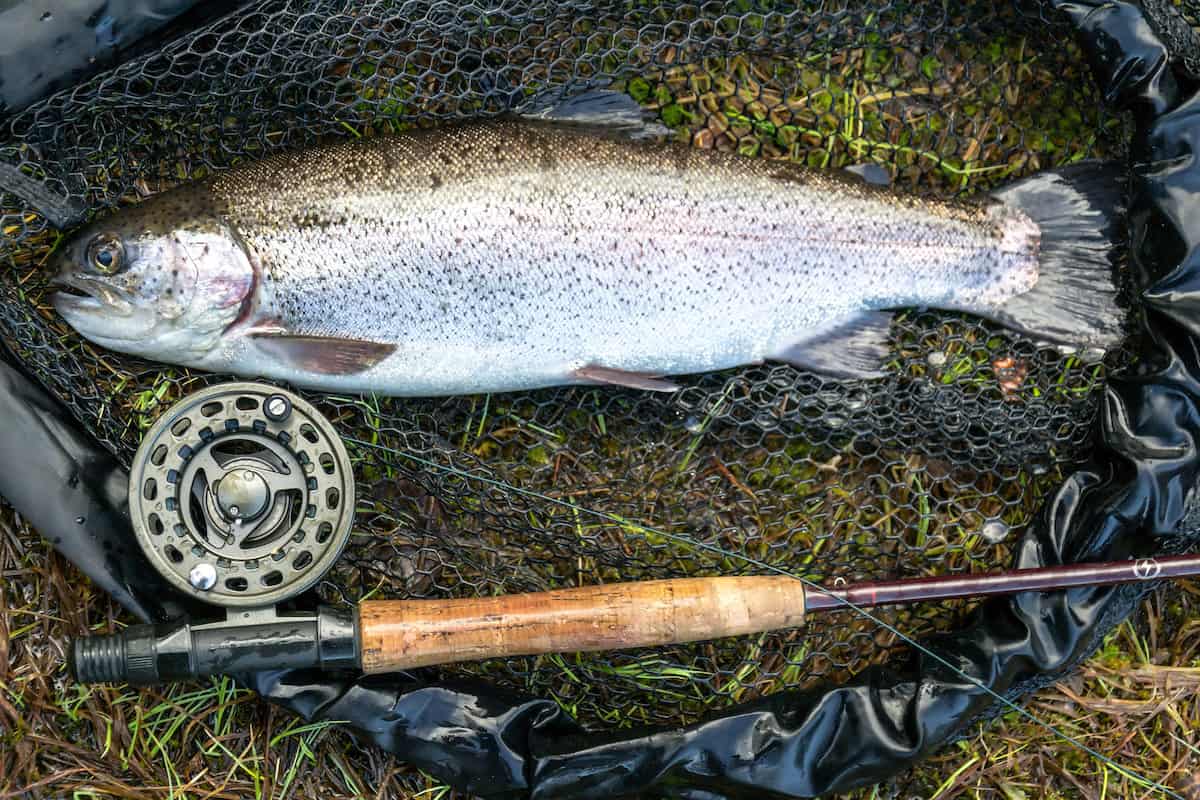
The McKenzie River flows through their backyard and is being stocked with a smidge over 83,000 legal-sized hatchery rainbow trout this season.
The Oregon Department of Fish and Wildlife plants these catchable trout into selected sections the river just about every week from late April until just after Labor Day. Right now is prime time to fish this river.
The part of the McKenzie River that is stocked each year starts at about Hendricks Bridge, where there’s a county park just east of Springfield. The stocked zone stretches alongside nearly 30 road miles upriver along the McKenzie Highway (Oregon 126) to the Forest Glen boat ramp at the community of Blue River.
Bridges, parks and pullouts with good truck and angler access are the most likely spots to be stocked. There is a lot of good access to this popular river.
I’ve built a simple schedule of when trout are stocked above and below Leaburg Dam, and in what numbers, in my complete guide to fishing the McKenzie River. It’s linked at the bottom of this article.
Fishing with bait is allowed in the area between Hendricks Bridge and the Forest Glen launch from April 22 through Halloween. Licensed anglers may harvest five trout per day as long as they have a clipped and healed adipose fin marking them as hatchery-reared fish.
It’s worth noting that the sections of the McKenzie below Hendricks Bridge and above Forest Glen are managed for wild trout, which must be released in nearly the entire river except for brook trout that may be kept far upriver above Blue Pool.
Leaburg Lake is located within the stocked section of river and also is stocked with an additional 20,000 or so hatchery trout not counted in the tally. If you want to change up your pace and fish some still water close to your car, this is a nice little spot to kick back on the bank and catch trout the easy way.
Hatchery trout are easy to catch, and you have several excellent options.
The simplest route to trout is probably bait-fishing. In moving water, I like to drift a piece of a nightcrawler or whole red worm or garden worm into pools, pockets, and moderately deep and paced drifts. Salmon eggs, mealworms, grasshoppers, or artificial worms and other packaged baits are also going to fool these fish.
Where needed, put a small split shot sinker a foot or two above your hook. It adds some distance to your cast and, more importantly, gets your bait into the prime trout zone along the bottom. I keep the weight light enough to maintain a natural drift and remove it altogether if it’s not needed, such as in lower flows.
I do a lot of lure fishing for trout in streams. Honestly, this is my first choice because I release most trout and lure caught fish tend to get hooked right in the lip, where they are easily unhooked and set free. Trout often swallow baits, potentially resulting in more fatal hooksets.
When I pull out my lure box, I usually first reach for a spinner, including a Panther Martin, Blue Fox, or Rooster Tail. While the balky blades on a Rooster Tail sometimes drive me nuts, I catch a lot of trout on these lures in browns, reds, and blacks fished just over the rocks, where they can look like a crayfish skittering backwards. Trout love these tiny lobsters.
Spoons also can catch loads of trout. Two of my favorites are the Kastmaster and the Thomas Buoyant. Kastmasters cast a mile and sink like lead, and they can be a challenge in smaller or shallower water, where I tend to hang them up a little too often.
I usually break out a spoon in bigger river pools or lakes and fish lighter spinners in shallower streams, but that’s a personal preference and your results may vary.
Finally, the McKenzie is among Oregon’s most famous fly-fishing streams. While some of that focus in on the wild fish, especially the larger redside rainbows and cutthroats in the river’s lowest reaches often fished with the help of drift boats, fly fishing is also a great way to catch stocked rainbows. Trout are built to eat lots of insects, and even fish raised on pellets in concrete runs don’t forget their roots.
Local fly shops can help you match the local hatches, if you want to get serious. I usually keep a supply of woolly buggers handy because most fish can’t resist them and hatchery trout are less sophisticated in their food choices than their wild kin.
While many fly fishers use standard fly rods, spin anglers also can get in on this game with a clear bubble set far enough above the fly to let it sink into the strike zones. A tiny split shot on the leader above the fly might help you out here.
I have a bunch more easy trout fishing tips in this free guide.
The McKenzie River is a couple of hours south of the Portland area or a little over an hour coming from Salem or Roseburg. Quite a few guides also work on this river, if you’d like some expert help.
The McKenzie also has runs of salmon and steelhead. The two biggest runs arrive back to the area from the ocean during spring and summer.
I also need to note that parts of the stocked area, including around Blue River, were hard hit by the Holiday Farm Fire of 2020. Five years on, you’ll still see lots of charred evidence but will be able to find nice spots to fish.
Here are some more free resources of interest on the Best Fishing in America website: